Match unit size to the sales channel
Small 50 g or 100 g portions can support controlled consumer servings, while 250 g and 500 g bags may suit family retail, restaurants or foodservice depending on menu volume.
Confirm whether the unit contains loose strands, tied bundles or multiple inner portions because this affects both usability and carton notation.
Protect dry noodles in distribution
Review bag barrier, seal integrity, carton strength, dividers and handling controls for moisture and breakage protection.
Approve carton dimensions and stacking through a packing trial before relying on pallet or container estimates.
Write clear soaking instructions
A useful label states water temperature, soaking time, whether draining or rinsing is needed and how the noodles enter the final recipe.
The supplied reference suggests warm-water soaking for several minutes, but final wording should come from the selected strand test.
Test cooking by application
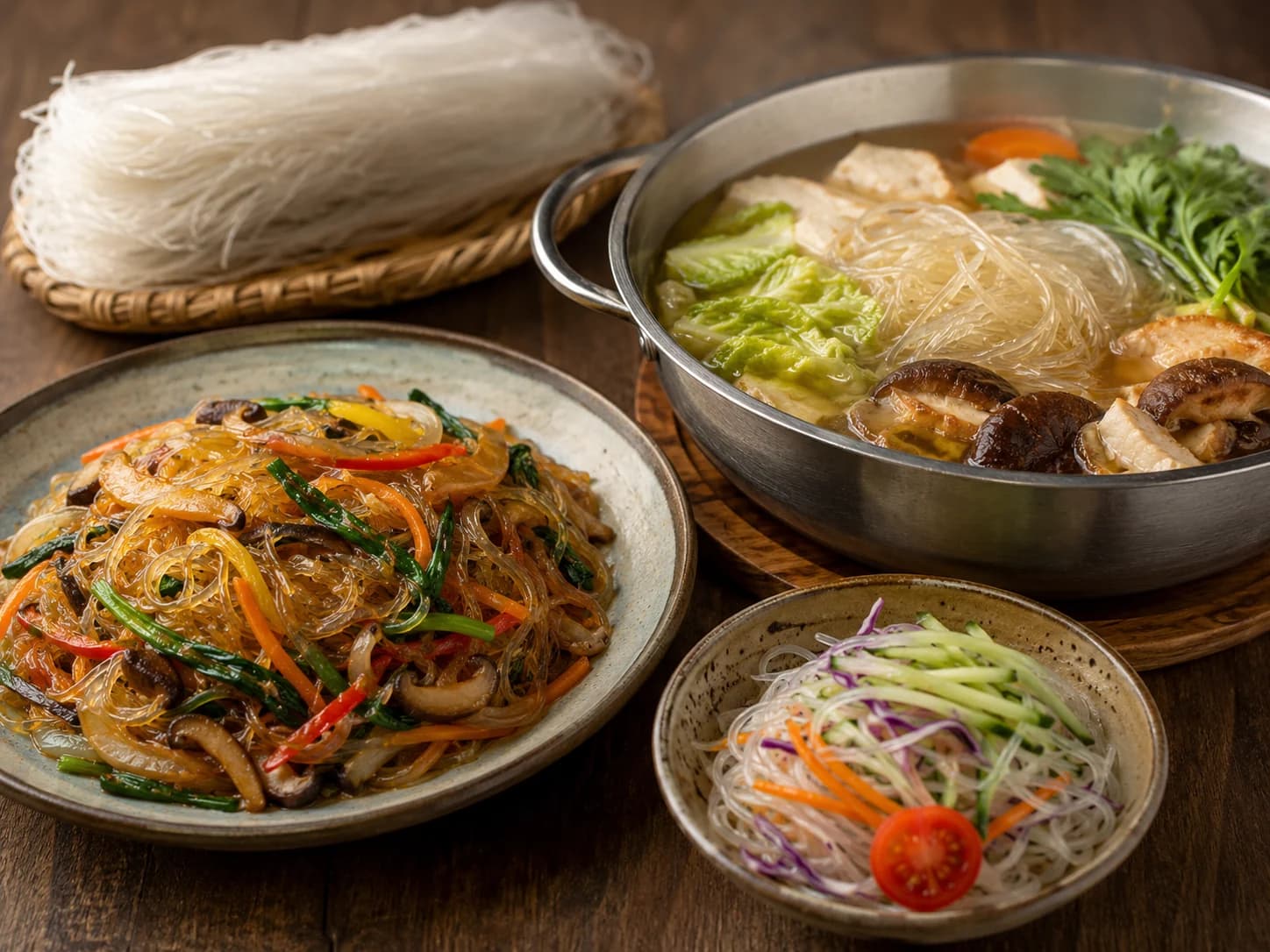
Hot pot, soup, stir-fry, salad and filling applications expose noodles to different heat and holding conditions. Test tenderness, chewiness and breakage in the real process.
Treat 3–5 minutes as a reference range rather than a universal instruction for every strand specification.
Coordinate OEM artwork and logistics
Align product name, ingredients, nutrition, preparation, storage, origin and certification wording with the approved SKU before printing.
Confirm bag and carton MOQ, artwork lead time, coding, gross weight, pallet pattern and verified loading for the chosen pack.
Need a product-specific quotation?
Send Longki Foods your target product, pack, quantity and destination market. We will identify the information that still needs confirmation.
Request a Quote