Start with precise raw material names
Mung bean is Vigna radiata, while green bean normally means the immature pod of Phaseolus vulgaris in English. A translated supplier listing can confuse these terms.
Ask for the original-language formula, botanical or technical raw material identity and final destination-market ingredient wording.
Distinguish single and mixed-starch formulas
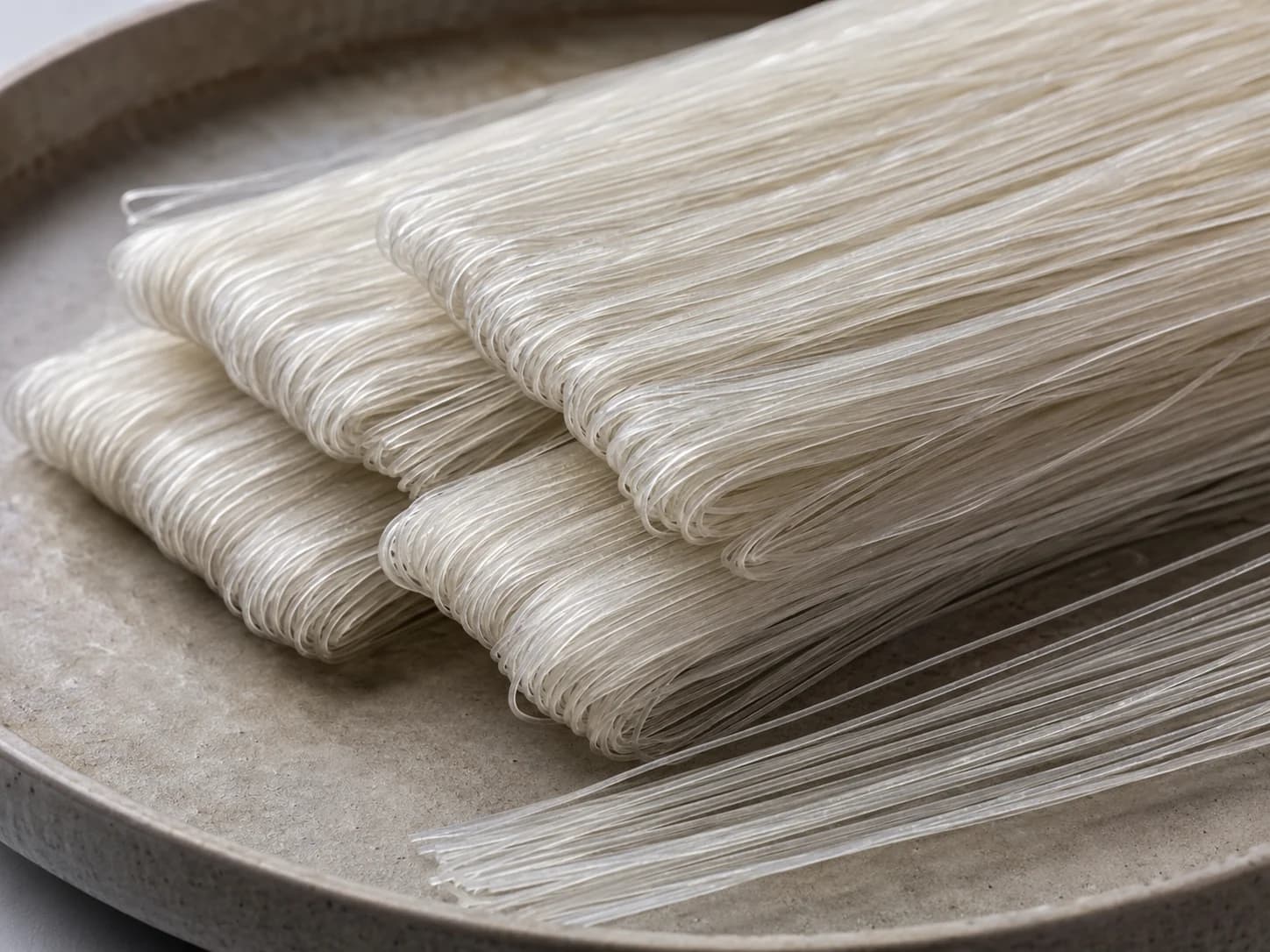
Some glass noodles are positioned as mung bean noodles, while commercial products may combine bean starch with corn, pea, potato or other starches.
Record every starch and its agreed specification instead of assuming composition from the product name.
Compare appearance and cooking behaviour
Formula and processing affect dried colour, transparency, strand strength, hydration, chewiness, smoothness and resistance to breaking during holding.
Use the same soaking and cooking protocol for sample comparisons and record the accepted result.
Align nutrition and claims
Nutrition values must correspond to the selected formula and test or calculation basis. Do not reuse one listing's panel across different starch blends.
Natural, gluten-free, allergen-free or other claims require destination-market review and supporting evidence.
Control repeat orders by version
Link formula, strand specification, approved sample, packaging and label under one SKU and revision date.
Any raw material substitution should trigger document and cooking-performance review before shipment approval.
Need a product-specific quotation?
Send Longki Foods your target product, pack, quantity and destination market. We will identify the information that still needs confirmation.
Request a Quote