What 3D shaped ice cream actually is
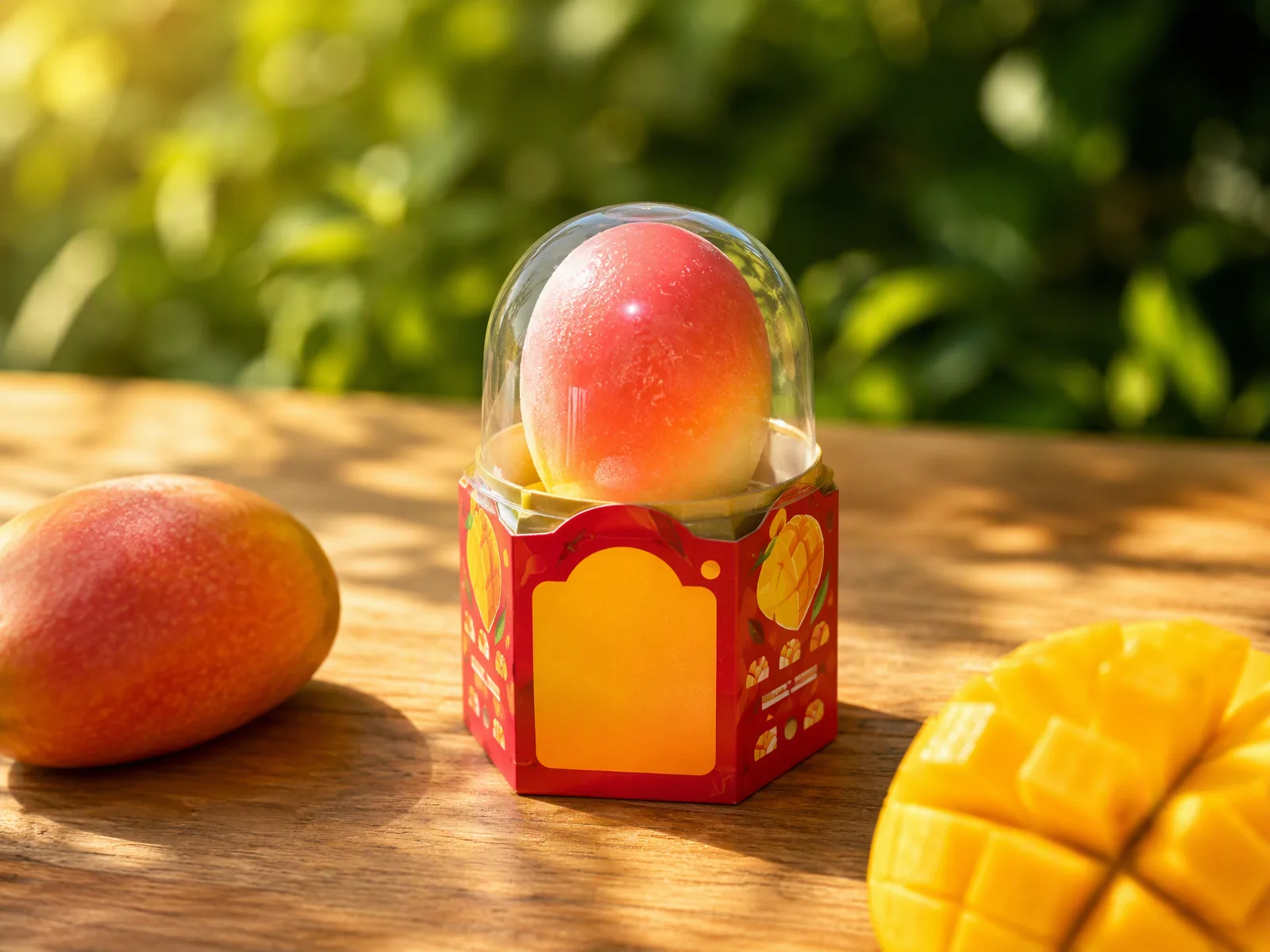
3D shaped ice cream is a molded frozen dessert: the piece is formed inside a closed mould instead of being extruded through a die and cut to length. That single difference is what lets a recognisable shape — a peach with a seam, a panda with ears, a burger with three visible layers — survive freezing, carton packing and a reefer container.
An extruded bar is shaped by cutting, so detail stops at the silhouette. A mould holds the surface as well: seams, leaf indents, seed texture and layer lines are formed by the tool rather than applied afterwards, which is why they do not wear off in the carton.
- Molded, not extruded: the shape is set by the tool
- Surface detail is formed, so it stays consistent across a production run
- Typical piece weight in a molded range: 65 g to 150 g
Why the shape does the selling, not the flavour
In buffet and dessert-bar service a molded shape reads as a made-in-house item rather than a commodity bar. In kiosk, park and leisure channels it works as an impulse buy and as something a customer photographs — which is why character shapes often outperform better flavours in those locations.
For an importer the practical benefit is that one base recipe can carry an entire range. Ten fruit shapes can share the same milk base and differ only by mould and colour, so a single formulation supports a full catalogue instead of ten separate recipes.
The numbers buyers ask for first
Most enquiries start with four figures: piece weight, pieces per carton, gross weight and shelf life. In the Longki molded range these sit in narrow bands, which makes mixed-load planning predictable.
- 19 designs currently in the range, from fruit forms to character and illusion shapes
- Piece weight: 65 g to 150 g
- Pieces per carton: 12 to 40, depending on piece size
- Gross weight per carton: 1.35 kg to 3.10 kg
- Shelf life: 18 months at -18°C or below, shipped in reefer containers
- Minimum order: 100 cartons per design
Carton format is a cost decision, not a packing detail
Several fruit designs can be supplied in more than one carton format — 285×215×120 mm square, 325×240×120 mm round, or 315×260×145 mm hexagonal. All three hold the same 12 pieces, but they stack differently.
Carton geometry sets the pallet footprint, and the footprint sets how many cartons fit a reefer. Choosing the format after the load plan is built means rebuilding the plan, which is why it should be fixed at order stage rather than at packing.
When a molded shape beats a standard bar — and when it does not
A molded shape earns its higher tooling cost where differentiation matters: buffet presentation, impulse fixtures, gift packs and social-led ranges. It also solves a specific problem for importers — a shape is harder to compare on price than a plain bar, so it holds margin better in a crowded freezer.
It does not win where the buyer is sourcing a commodity. If the requirement is the lowest cost per unit for a plain vanilla bar, an extruded product will usually beat a molded one, and no amount of shape detail changes that arithmetic.
What to confirm before you request a quotation
Four items decide whether a quote is usable: the recipe and allergen profile, the carton format, the minimum quantity per design, and the destination market's labelling and import requirements. A quote issued without those four tends to be revised twice before it becomes an order.
- Recipe, ingredient list and allergen declaration for the target market
- Carton format, if the design offers more than one
- Minimum cartons per design and whether a mixed load is planned
- Destination documents: certificate of origin, health certificate, labelling language
Need a product-specific quotation?
Send Longki Foods your target product, pack, quantity and destination market. We will identify the information that still needs confirmation.
Request a Quote